Diffit for Teachers: Differentiate Any Reading Text in Minutes
A practical review of Diffit for mixed-ability classes: adapting one text to several reading levels, building tiered questions and supporting language learners.
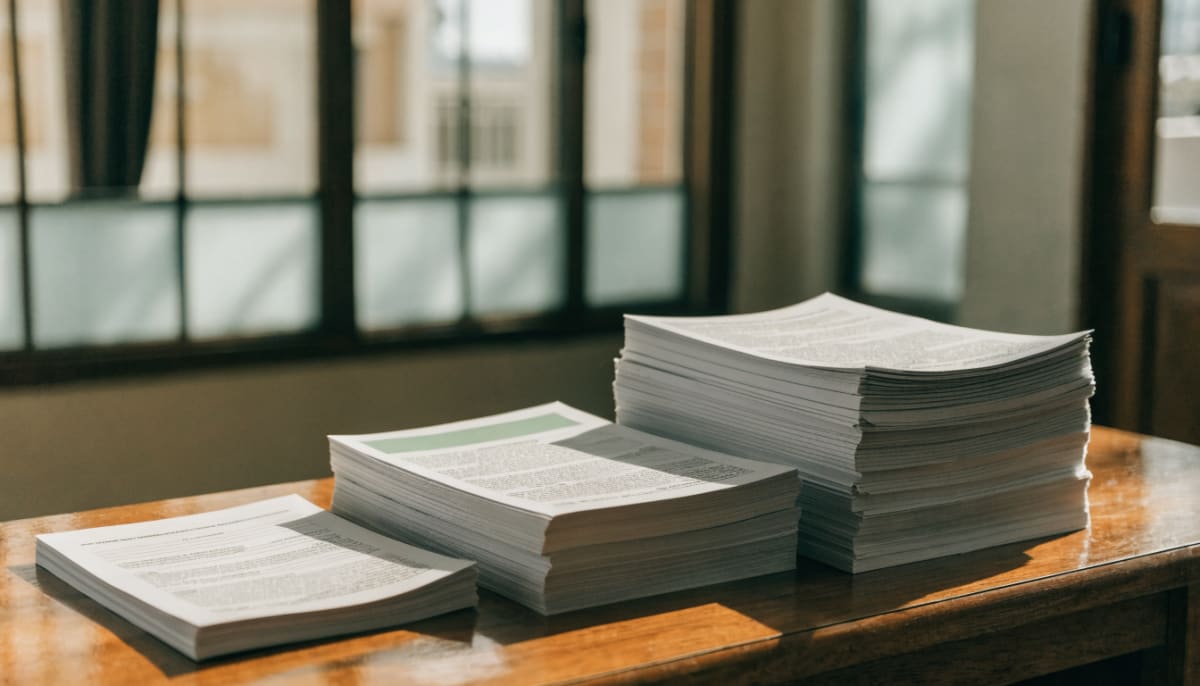
One Text, Three Reading Levels
Most classes contain a wide spread of reading ability. Some students can handle a newspaper feature without help, while others still struggle with long sentences and unfamiliar vocabulary. Rewriting the same text at three levels, then writing questions for each version, can easily take two or three hours for a single topic.
Diffit is built for exactly this job. It takes a text and produces versions at different reading levels, together with vocabulary, a summary and questions, in a few minutes.
What Diffit Does
Diffit is an AI tool for differentiated reading. You give it a starting point, such as a topic, a web article, a PDF, pasted text or a YouTube video, then choose a grade level. It returns:
- A reading passage adapted to that level, keeping the main facts and ideas.
- Key vocabulary with student-friendly definitions.
- A short summary.
- Comprehension questions, including multiple-choice, short-answer and open-ended items.
The result can be exported to Google Docs, Slides or Forms, or as a PDF, so it fits into most existing workflows.
Four Practical Ways to Use It
1. Adapt One Article for Different Groups
Choose one good article on your topic, for example photosynthesis. Generate a lower-level version for students who need support and a higher-level version for students who are ready for more. Everyone studies the same content, so whole-class discussion still works.
A lower-level version might explain "chlorophyll" as "the green substance in leaves that captures sunlight" instead of dropping the term completely. Check that key terms are kept and explained, not just removed.
2. Build Questions That Increase in Difficulty
Ask for questions that move from recall to analysis and evaluation. Students can start with the basic questions and move on as they are ready, which makes it easier to run mixed-ability group work.
3. Support Language Learners with Vocabulary Lists
For English language learners, the vocabulary list is often the most useful part. Ask students to add a translation in their first language next to each word, or to write their own example sentence. For a text about democracy, words such as "election", "government" and "rights" become a short, focused vocabulary lesson.
4. Prepare Remedial and Extension Material Quickly
Early finishers can read the higher-level version. Students who fell behind can take home the simpler version for extra practice. Both come from the same source, so you are not managing two different topics.
Prompts and Starting Points You Can Copy
- "Adapt this article about rainforests for 10-year-old students. Include a vocabulary list with simple definitions."
- "Create comprehension questions at three levels of difficulty for this text about the water cycle, with one higher-order question at each level."
- "Simplify this news article to about 100 words for beginner English learners, then add a fill-in-the-blanks exercise."
Strengths
- Real time savings. Work that takes hours by hand takes minutes, and you still decide what goes to students.
- Content stays consistent across levels. Students who need support are not given a different, thinner lesson.
- Multilingual output. Diffit can produce material in many languages, which helps in bilingual classrooms.
- Easy export. Google Docs, Slides, Forms and PDF cover most classroom setups.
Limitations
- Check facts and local context. Simplifying a text can blur details. This matters most for local history, culture or names the model knows less about.
- Grade levels are a guide. A "grade 4" text may still be hard for some of your grade 4 students. Read it with your class in mind.
- The free plan has limits. Heavy users may need the paid plan. Check current pricing on the Diffit website.
Who It Is For
Diffit is most useful for teachers of mixed-ability classes, English language teachers and anyone who uses real-world reading material in science or humanities. Start with one article you already plan to use next week, generate two levels, and compare them side by side before deciding how much to rely on it.
This article is also available in Malay. Use the BM | EN switch at the top of the page.
Further Reading
Books on differentiated instruction on Amazon (affiliate link: I may earn a small commission at no extra cost to you).
Editor's note: This article was drafted with the help of AI tools, then reviewed and edited by Ts. Ashraf bin Naim before publication. The examples and recommendations are based on real experience in education administration and teacher training in Malaysia.
About Ts. Ashraf bin Naim
An educator and professional technologist who trains teachers to use AI and digital tools in their daily work.